Economics

Pakistan’s Economic Crisis Deepens as Military Spending Rises Amid $23 Billion Debt Obligation

Download IPFS

Despite talk of an economic “turnaround,” Pakistan’s financial reality tells a more troubling story. The country faces over $23 billion in external debt payments this fiscal year, while its total public debt has surpassed Rs76 trillion. Although nearly half of the federal budget is consumed by debt servicing, Islamabad continues to prioritise costly military procurements from China and Turkey, raising serious questions about fiscal responsibility and long-term economic strategy.

According to the Pakistan Economic Survey 2024–25, the debt profile is heavily skewed. Of the Rs76 trillion total debt, Rs51.52 trillion is domestic, and Rs24.49 trillion (roughly $87.4 billion) is external. This external debt includes government loans and borrowing from the International Monetary Fund (IMF). This fiscal year’s $23 billion repayment package includes $12 billion in temporary deposits from “friendly” nations such as Saudi Arabia ($5 billion), China ($4 billion), the United Arab Emirates ($2 billion), and Qatar ($1 billion). While Pakistan expects these funds to be rolled over, failure to do so could push the economy toward another default.

Even if these rollovers are secured, Islamabad still needs to pay $11 billion to bilateral and multilateral lenders, commercial banks, and global bondholders. Major payments this year include $2.8 billion to institutions like the World Bank, Asian Development Bank (ADB), Islamic Development Bank (IsDB), and Asian Infrastructure Investment Bank (AIIB), $2.3 billion in commercial loans, and $1.7 billion in bond repayments. Debt servicing remains Pakistan’s largest expenditure, with Rs8.2 trillion—about 47% of the total Rs17.57 trillion federal budget for FY 2025–26—allocated for this purpose.

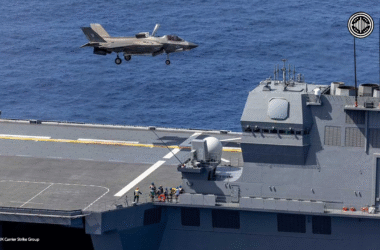
What defies logic is the continued increase in defense spending, including recent procurement of drones, missile systems, and naval vessels. These deals are being finalized even as the country requests temporary bailouts and faces a severe fiscal squeeze. This military-first approach, while politically convenient for the powerful armed forces, undermines meaningful economic reform. For a nation experiencing chronic financial stress, true recovery depends on reducing non-essential spending, building investor confidence, and improving institutional transparency. Until then, talk of an economic turnaround will remain just that talk, not real progress.

Leave a Comment

Your email address will not be published. Required fields are marked *

*

OPENVC Logo OpenVoiceCoin $0.00
OPENVC

Latest Market Prices

Bitcoin

Bitcoin

$92,051.76

BTC 3.28%

Ethereum

Ethereum

$3,164.62

ETH 4.40%

NEO

NEO

$4.16

NEO 1.54%

Waves

Waves

$0.76

WAVES 2.59%

Monero

Monero

$380.07

XMR 0.86%

Nano

Nano

$0.81

NANO 3.49%

ARK

ARK

$0.29

ARK 1.22%

Pirate Chain

Pirate Chain

$0.26

ARRR 9.70%

Dogecoin

Dogecoin

$0.14

DOGE 3.84%

Litecoin

Litecoin

$83.99

LTC 2.91%

Cardano

Cardano

$0.44

ADA 4.86%

Subscribe to Blog via Email

Enter your email address to subscribe to this blog and receive notifications of new posts by email.