Breaking News

Trump, Pakistan Energy Talks Could Shift South Asia Dynamics

Download IPFS

In a move that could reshape energy cooperation in South Asia, former President Donald Trump has announced exploratory talks on a strategic oil partnership between the United States and Pakistan. The potential deal focuses on tapping Pakistan’s substantial oil and gas reserves and could, if realised, position the country as an emerging energy supplier. Trump also hinted at the possibility of future Pakistani oil exports to India, an idea that challenges decades of bilateral hostility between the two nations. As Pakistan moves toward global energy engagement, India faces renewed economic headwinds, including trade penalties and stalled diplomacy.

Pakistan’s estimated 235 trillion cubic feet of natural gas reserves, reported by Energy Minister Mohammad Ali in 2024, form the core of the proposed collaboration. If developed, these reserves could contribute significantly to the region’s energy mix. The proposal also comes at a time when China’s influence in Pakistan has waned. Beijing’s $60 billion China-Pakistan Economic Corridor (CPEC), once touted as a pillar of regional connectivity, has faced repeated delays and financial strain, weakening its impact. In this context, the potential U.S.-Pakistan initiative may present a more stable and transparent alternative, though key terms and timelines remain undisclosed.

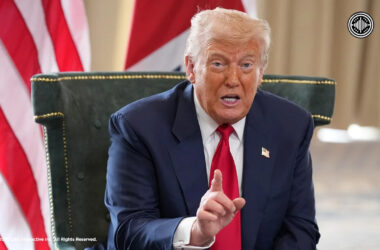
“Pakistan has immense potential, and this partnership unlocks a future where it’s no longer dependent on outside funding but is instead driving its own growth,” Trump said during his remarks. His suggestion that oil could eventually be sold to India adds a provocative element to the discussion, especially given that formal trade between India and Pakistan has been virtually frozen since 2019. Although bilateral trade reached a high of $2.7 billion in 2012–13, according to India’s High Commission, political tensions—particularly over Kashmir—have prevented any sustained economic engagement in recent years.

Meanwhile, India is facing increasing pressure on the trade front. Reports of a potential 25% U.S. tariff on Indian auto exports reflect a pattern of hard-nosed negotiating tactics previously used by Trump. A similar strategy was employed with Japan, which agreed to a 15% tariff arrangement and pledged $550 billion in investments, according to The New York Times (24 July 2025). South Korea, too, finds itself constrained by a 2007 trade agreement that limits its leverage in ongoing discussions with Washington.

If confirmed, the Trump-Pakistan oil discussion could serve as more than an energy venture, it may also be a strategic recalibration of regional influence. By exploring deeper ties with Pakistan, the United States positions itself to counterbalance China’s economic footprint while encouraging a more diversified regional energy framework. At the same time, India’s options may narrow if it continues to resist engaging in pragmatic trade relationships. While the path forward remains uncertain, the early outlines of this proposal suggest a potential turning point in South Asian energy and diplomatic strategy.

Leave a Comment

Your email address will not be published. Required fields are marked *

*

OPENVC Logo OpenVoiceCoin $0.00
OPENVC

Latest Market Prices

Bitcoin

Bitcoin

$91,657.80

BTC 2.61%

Ethereum

Ethereum

$3,129.53

ETH 3.10%

NEO

NEO

$4.14

NEO 0.40%

Waves

Waves

$0.77

WAVES 3.46%

Monero

Monero

$375.16

XMR -2.74%

Nano

Nano

$0.81

NANO 2.53%

ARK

ARK

$0.29

ARK 0.36%

Pirate Chain

Pirate Chain

$0.26

ARRR 9.00%

Dogecoin

Dogecoin

$0.14

DOGE 2.25%

Litecoin

Litecoin

$83.45

LTC 1.62%

Cardano

Cardano

$0.43

ADA 3.27%

Subscribe to Blog via Email

Enter your email address to subscribe to this blog and receive notifications of new posts by email.