Breaking News

Trump Secures Landmark U.S.-South Korea Trade Deal, Slashing Tariffs and Boosting American Investments

Download IPFS

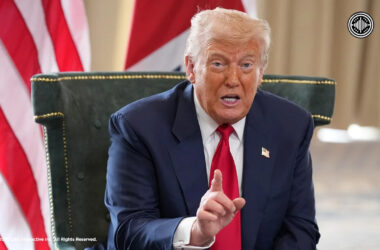
In a significant win for American trade policy, U.S. President Donald Trump announced a sweeping new agreement with South Korea that will lower tariffs and secure a $350 billion investment package geared toward U.S.-controlled ventures. The deal, which Trump described as “Full and Complete,” resets tariffs on South Korean exports to the United States at 15%, down from the previously threatened 25%. Automotive tariffs will also be reduced from 25% to 15%, offering immediate relief to exporters while maintaining a strong negotiating position for future U.S. trade talks.

The announcement was made via Trump’s official account on the social media platform Truth Social. Trump emphasised that the deal represents a “clear and fair exchange,” whereby South Korea will channel $350 billion into projects that are “owned and controlled by the United States, and selected by myself, as President.” While the exact structure of the investment remains under discussion, U.S. Commerce Secretary Howard Lutnick clarified that “90% of the profits” from this investment will benefit the American people.

The deal arrives at a critical juncture, with the United States facing sustained trade imbalances, particularly with key Asian economies. In 2024, America’s trade deficit with South Korea stood at $66 billion, an increase of 29.2% from the previous year, according to U.S. Department of Commerce data. Trump’s agreement is aimed at narrowing that gap by boosting American exports and ensuring a larger share of foreign investments remain under U.S. control.

On the Korean side, President Lee Jae-myung framed the agreement as a catalyst for Korean firms to gain deeper access to American markets, especially in high-tech sectors such as semiconductors, shipbuilding, and biotechnology. According to a statement translated by CNBC, Lee allocated $150 billion of the pledged amount specifically for “shipbuilding cooperation providing strong support for Korean companies entering the U.S. shipbuilding industry.” While Seoul portrays the deal as mutually advantageous, its language notably reflects a more cautious stance on the profit-sharing terms.

The announcement also included a commitment from South Korea to purchase $100 billion worth of American liquefied natural gas (LNG) and other energy products. This marks a clear strategic alignment with U.S. energy goals and represents a major boost to domestic producers. Trump added that further investment details would be made public during President Lee’s scheduled state visit to Washington in the coming weeks.

Importantly, the agreement ensures that American goods entering South Korea will continue to face no additional tariffs, with South Korea’s effective tariff rate for U.S. imports currently at a minimal 0.79%. Since the U.S.–Korea Free Trade Agreement (KORUS) took effect in 2012, trade volumes have steadily grown, though often disproportionately favouring Korean exporters. This new agreement, by recalibrating the terms, seeks to level the playing field.

In terms of exclusions, key Korean exports such as steel, aluminium, and copper will remain under existing tariffs of 50%, a decision consistent with Trump’s broader policy of protecting critical American industries. Lutnick reaffirmed that South Korea will “not be treated any worse than any other country” when it comes to sensitive sectors like semiconductors and pharmaceuticals.

Market reactions in Seoul were cautiously optimistic. The Kospi index rose 0.5% following the announcement, while the yield on South Korea’s 10-year government bonds saw a modest uptick, reflecting both investor confidence and anticipated capital outflows linked to the investment package.

The Trump-led trade realignment with South Korea follows a similar pattern to an earlier agreement with Japan, wherein Tokyo pledged a $550 billion investment, also heavily favouring American oversight. While some allies may raise concerns about the profit distribution frameworks, the agreements signal a clear pivot toward trade deals that explicitly prioritise American interests.

As the United States navigates an increasingly multipolar global economy, this trade agreement not only underscores Trump’s doctrine of assertive economic diplomacy but also reinforces the foundational alliance between Washington and Seoul, on terms that are firmer, fairer, and ultimately, more beneficial for American workers and taxpayers.

Leave a Comment

Your email address will not be published. Required fields are marked *

*

OPENVC Logo OpenVoiceCoin $0.00
OPENVC

Latest Market Prices

Bitcoin

Bitcoin

$91,418.73

BTC 2.20%

Ethereum

Ethereum

$3,139.62

ETH 3.14%

NEO

NEO

$4.13

NEO -0.83%

Waves

Waves

$0.77

WAVES 8.29%

Monero

Monero

$375.24

XMR -5.01%

Nano

Nano

$0.81

NANO 0.27%

ARK

ARK

$0.29

ARK -0.49%

Pirate Chain

Pirate Chain

$0.26

ARRR 10.71%

Dogecoin

Dogecoin

$0.14

DOGE 1.51%

Litecoin

Litecoin

$83.19

LTC 1.60%

Cardano

Cardano

$0.43

ADA 3.99%

Subscribe to Blog via Email

Enter your email address to subscribe to this blog and receive notifications of new posts by email.